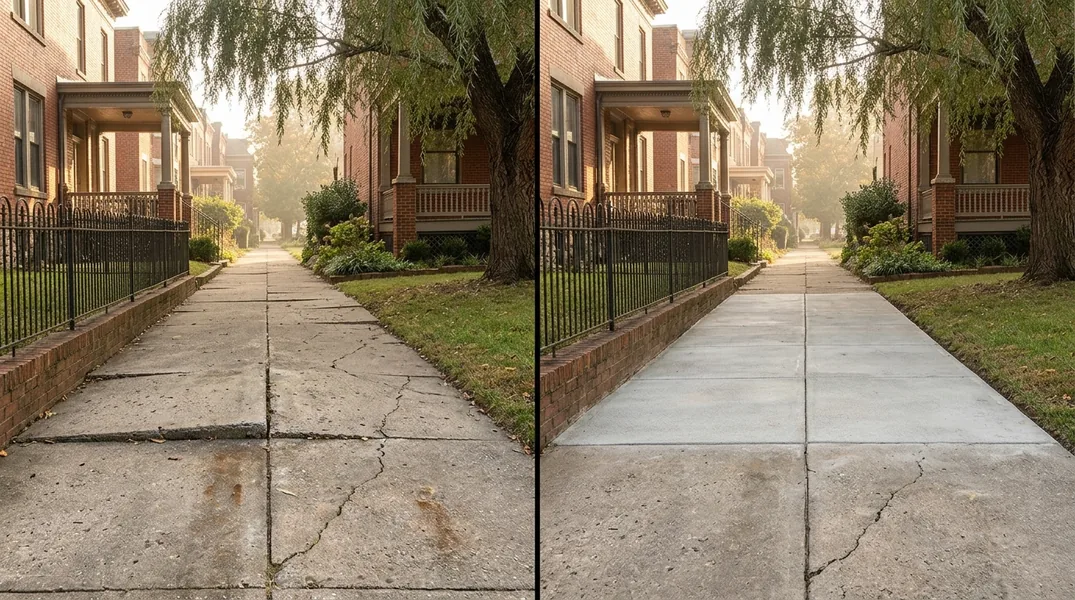
Understanding Richmond's Unique Soil Challenge
If you own a home in Richmond, you've probably noticed that concrete doesn't seem to last as long here as it does in other parts of the country. That's not your imagination. The Piedmont region of Virginia, where Richmond sits, has a very specific geological makeup that creates serious problems for concrete structures. The culprit is red clay, a dense, iron-rich soil that dominates the landscape and behaves very differently from sandy or loamy soils found in other areas.
Red clay is highly expansive, meaning it swells when it absorbs water and shrinks when it dries out. This constant movement creates tremendous pressure on anything built on top of it, including your driveway. Unlike stable, well-draining soils, red clay holds moisture for extended periods, and its mineral composition makes it particularly prone to shifting. When your Concrete Driveways are poured directly on this unstable foundation, the stage is set for cracking, settling, and premature failure. Many homeowners assume their concrete simply wasn't installed correctly, but the real issue often lies beneath the surface, quite literally.
The Freeze-Thaw Cycle: Winter's Attack on Your Driveway
Virginia's winter weather adds another layer of complexity to concrete durability. The freeze-thaw cycle occurs when water penetrates concrete, freezes during cold nights, and then thaws during warmer days. Each cycle creates internal stress that gradually weakens the concrete from the inside out. In Richmond, where temperatures often hover around the freezing point throughout winter, this cycle can repeat dozens of times in a single season.
When water freezes, it expands with tremendous force, roughly 9 percent more volume than liquid water. This expansion pushes against the concrete's pores and micro-cracks, widening them further. As the ice melts and refreezes, the damage compounds. Over several winters, this process creates visible cracks, spalling (flaking of the surface), and potholes that make your driveway look far older than it actually is. The problem is especially severe when red clay soil underneath the concrete is also going through its own freeze-thaw cycle, creating upward pressure that works against the concrete slab itself. This double assault is why Concrete Repair & Resurfacing is such a common need for homeowners in this region.
How Red Clay and Freeze-Thaw Work Together to Damage Concrete
The real damage in the Piedmont comes from the combination of red clay soil and Virginia's winter weather patterns. When rain falls and water seeps into the red clay beneath your driveway, the clay expands. If temperatures then drop below freezing, that water-saturated clay freezes solid and expands upward, heaving the concrete slab. This heaving is uneven because some areas of the clay absorb more water than others, creating differential movement that the concrete simply cannot accommodate. The result is cracking, buckling, and surface deterioration that happens much faster than in regions with more stable soil.
Additionally, once the initial cracks form in the concrete, water infiltrates those cracks and reaches the clay below. This accelerates the expansion and contraction cycle, making the problem worse with each passing season. What starts as a small hairline crack can become a significant structural issue within just a few years if left unaddressed. Homeowners often don't realize that even minor cracks are gateways for water damage, and in Richmond's climate, that water damage compounds rapidly. This is why early intervention and professional assessment are so important for protecting your investment.
Signs Your Driveway Is Suffering from Red Clay and Freeze-Thaw Damage
Recognizing the early warning signs of concrete damage can help you address problems before they become expensive. The most obvious sign is visible cracking, but the pattern of cracks matters. Random, spider-web-like cracks often indicate freeze-thaw damage, while long, linear cracks may suggest settling caused by unstable red clay soil. You might also notice that sections of your driveway are higher or lower than others, a condition called heaving or settling that's almost always caused by soil movement beneath the surface.
Other telltale signs include potholes, spalling (chunks of concrete breaking away), white powder or efflorescence on the surface, and areas where the concrete seems to be pulling away from itself. If your driveway was installed just a few years ago and is already showing significant wear, that's a red flag that the installation didn't account for the unique challenges of red clay and freeze-thaw cycles. Water pooling on the surface is another warning sign, as it indicates the concrete has settled unevenly. If you're noticing any of these issues, it's time to contact Richmond Concrete for a free estimate to assess the damage and discuss your options.
Prevention and Solutions for Red Clay Concrete Cracking in Richmond
The best defense against red clay and freeze-thaw damage is proper installation from the start. A quality concrete driveway should be installed on a well-prepared base that includes proper drainage, adequate gravel or stone base layers, and concrete that's been mixed with the right air entrainment to handle freeze-thaw cycles. Air entrainment introduces tiny air bubbles into the concrete that allow water to expand without damaging the material. However, many driveways installed without this consideration are already suffering.
For existing driveways, Concrete Repair & Resurfacing can extend the life of your investment significantly. Smaller cracks can be sealed to prevent water infiltration, while more severe damage might require resurfacing or partial replacement. In some cases, installing a new concrete layer over the existing driveway can provide decades of additional protection, especially if the underlying red clay issues are addressed through better drainage solutions. Richmond Concrete specializes in understanding how Piedmont soil and Virginia winters interact with concrete, and we can recommend the most cost-effective solution for your specific situation.
When to Call a Professional for Concrete Repair Near Me
Attempting DIY repairs on concrete damaged by red clay and freeze-thaw cycles is rarely successful. The underlying problems are structural, not cosmetic, and temporary fixes often fail within a season or two. Professional concrete contractors have the experience and equipment to diagnose whether your damage is primarily from soil movement, freeze-thaw cycles, or a combination of both. This diagnosis is crucial because the solution differs depending on the root cause.
If you're in Glen Allen, Short Pump, Tuckahoe, or anywhere else in the greater Richmond area, you're dealing with the same red clay and freeze-thaw challenges. Richmond Concrete has spent years helping homeowners in this region protect their driveways and understand the unique demands of Piedmont soil. We can evaluate your driveway's condition, explain what's causing the damage, and provide realistic options for repair or replacement. Call us today at (804) 885-2499 or visit our website to schedule your free estimate. Don't wait until small cracks become major structural problems. Early action saves money and protects your property value.
Looking for a professional concrete contractor in Richmond? Richmond Concrete responds fast for all your concrete needs.
Get a Free QuoteOur services: Concrete Driveways · Concrete Patios · Stamped & Decorative Concrete